Central Lancaster drivers grind their vehicles harder than they realize. The mix of wind, dust, heat, and stop-and-go traffic on Avenue K, 10th Street West, and the 14 corridor creates conditions that punish cars faster than any auto manual accounts for. Most drivers do not realize the mistakes they are making until something breaks. Here are the seven most common maintenance errors central Lancaster drivers make, and how to fix each one.
Why Central Lancaster Is Hard on Vehicles
Central Lancaster sits at the crossroads of tough conditions. Summer temperatures push past 105 degrees. Winter mornings drop to the 20s. Winds coming off the Mojave carry dust into every part of your engine and cabin. Drivers here often mix short trips to the BLVD, the AV Fairgrounds, or Antelope Valley Hospital with occasional long hauls down the 14. That combination stresses vehicles differently than pure highway or pure city driving.
Understanding the mistakes below saves you thousands in repairs over the life of your vehicle.
Mistake 1: Following the 7,500-Mile Oil Change Interval
The manual on your dashboard says 7,500 miles between oil changes. That interval assumes normal driving in mild conditions. Central Lancaster driving is not normal.
Severe service conditions apply to almost every Lancaster driver. The signs include:
- Sustained temperatures above 90 degrees
- Frequent trips under 10 miles
- Dust and desert exposure
- Extreme cold starts
- Occasional highway driving mixed with city trips
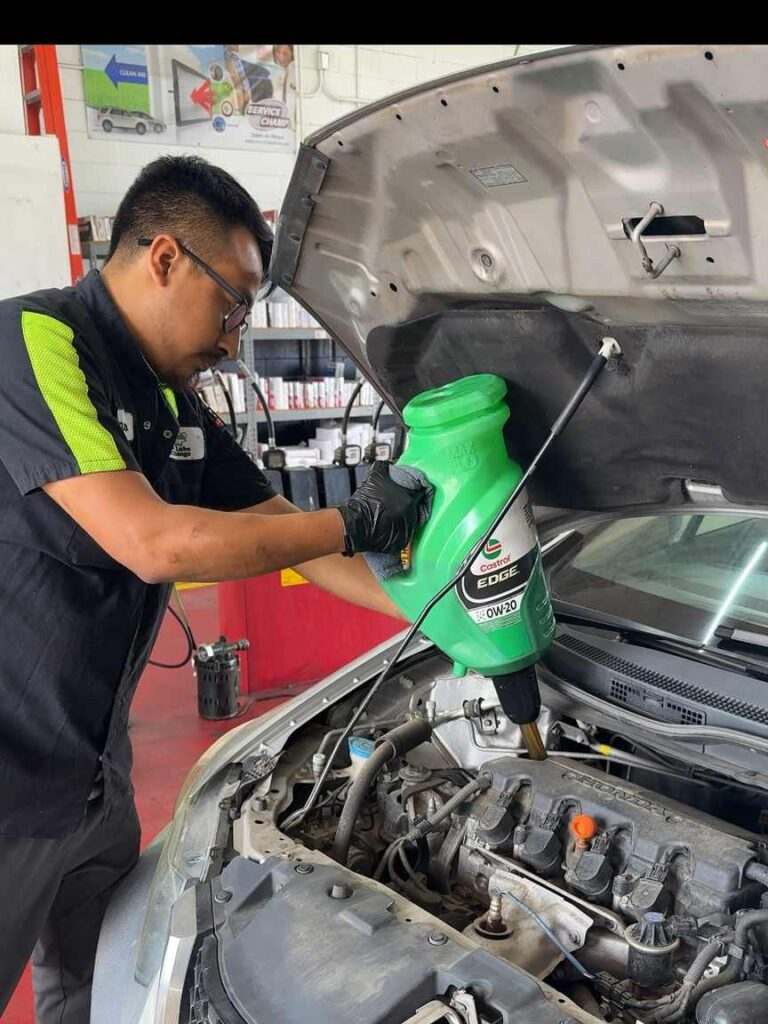
If you meet three or more, you qualify for severe service. Stick to 4,000 to 5,000 miles between full synthetic oil changes. Extending beyond that in Lancaster heat lets oil break down and coat internal engine parts with sludge.
The fix: Change your oil every 4,000 to 5,000 miles on synthetic. Use the manufacturer-recommended viscosity, usually 0W-20 or 5W-30 for modern vehicles.
Mistake 2: Ignoring the Cabin Air Filter
Most Lancaster drivers never think about their cabin air filter until the AC starts smelling musty or the airflow drops. By then, the filter is packed with Mojave dust, pollen, and road grime.
A clogged cabin filter forces your blower motor to work harder, cuts AC efficiency, and pushes contaminated air into your face on every drive.
Warning signs:
- Weak AC or heater airflow
- Musty smell when the fan runs
- Fogging windows that take forever to clear
- Dust visible on the interior vents
The fix: Replace the cabin air filter every 12,000 to 15,000 miles or once a year, whichever comes first. Lancaster wind and dust conditions push this closer to annual replacement for most drivers. The engine air filter needs similar attention every 10,000 to 15,000 miles.
Mistake 3: Skipping Coolant Service
Coolant does not just prevent overheating. It prevents corrosion inside your radiator, water pump, and engine block. Old coolant loses its corrosion inhibitors and turns acidic, eating your cooling system from the inside.
Lancaster summer heat exposes weak cooling systems fast. A radiator that runs fine in April fails in August when temperatures hit 108 degrees. Drivers who skip coolant service often find out the hard way with a blown head gasket or cracked radiator.
Warning signs:
- Temperature gauge running higher than usual
- Sweet smell from the engine
- Coolant reservoir low or empty
- Visible rust or debris in the coolant
- White exhaust smoke
The fix: Coolant exchange every 30,000 to 50,000 miles depending on vehicle and coolant type. Check the reservoir monthly. Replace at the first sign of contamination.
Mistake 4: Assuming Your Battery Is Fine Until It Dies
Lancaster heat kills car batteries faster than moderate climates. A battery rated for 5 years often fails at 3 in the Antelope Valley. Summer heat evaporates the electrolyte, and winter cold snaps finish off weak batteries with no warning.
Most drivers wait until the car will not start. That happens in the worst possible spot at the worst possible time.
Warning signs:
- Slow engine cranking on cold mornings
- Dim headlights at idle
- Electrical accessories acting glitchy
- Battery age over 3 years
- Corrosion on the terminals
The fix: Test your battery every 6 months starting at year 2. Free tests are available at all three EZ Lube locations. Replace the battery proactively at 3 to 4 years, before it strands you at the AV Fairgrounds parking lot on a Saturday night.
Mistake 5: Riding the Brakes Instead of Downshifting
Central Lancaster drivers who commute down the 14 through Acton often ride the brakes down the grade. That habit destroys brake pads and warps rotors faster than any other single mistake.
Brake pads that would last 50,000 miles on a normal driver fail at 20,000 to 25,000 miles when riding is the norm. Warped rotors add hundreds of dollars to the repair bill.
Warning signs:
- Vibration in the steering wheel or pedal when braking
- Squealing or grinding sounds
- Brake pedal feels soft
- Longer stopping distances
- Burning smell after descending Acton or Sierra Highway
The fix: Downshift on long descents. Automatic transmissions can use lower gears (usually 2 or 3) or the manual mode on newer vehicles. This uses engine compression to slow you down and saves your pads. Have brakes inspected every oil change.
Mistake 6: Neglecting Tire Rotation and Alignment
Central Lancaster drivers hit potholes on Avenue K, 10th Street West, and the constant construction along the 14. Every impact throws alignment off a little more. Skipping rotations lets one tire wear faster than the others. Both mistakes force you to replace all four tires 15,000 to 20,000 miles sooner than necessary.
Warning signs:
- Uneven tire wear (inside edge, outside edge, or center)
- Steering wheel not centered when driving straight
- Vehicle pulls to one side
- Vibration at highway speeds
- Tire pressure differences between tires
The fix: Rotate tires every 5,000 miles at your oil change visit. Get alignment checked annually or after any hard impact. Check tire pressure monthly, especially with big temperature swings between winter and summer.
Mistake 7: Waiting Until Something Breaks to Get Service
The most expensive mistake central Lancaster drivers make is running vehicles until something fails instead of doing preventive maintenance. A $60 oil change delayed for 3,000 extra miles turns into a $3,000 engine repair. A $150 coolant service skipped turns into a $2,500 head gasket job. A $200 brake job put off becomes a $600 rotor and caliper replacement.
Preventive maintenance always costs less than reactive repair. Always.
The fix: Follow a maintenance schedule based on your actual driving conditions, not the base manufacturer recommendations. Central Lancaster drivers should plan for:
- Oil change every 4,000 to 5,000 miles
- Tire rotation every 5,000 miles
- Air filter and cabin filter every 10,000 to 15,000 miles
- Brake inspection every oil change
- Battery test every 6 months after year 2
- Coolant exchange every 30,000 to 50,000 miles
- Transmission service per your manufacturer schedule
- Alignment check annually
Keep records. Save your receipts. Preventive maintenance protects your warranty and your wallet.
Central Lancaster Maintenance Schedule
Here is a simplified schedule based on typical central Lancaster driving conditions.
Every 4,000 to 5,000 miles:
- Full synthetic oil and filter change
- Tire rotation
- Multi-point inspection
10,000 to 15,000 miles:
- Engine air filter
- Cabin air filter
- Brake pad inspection
20,000 to 30,000 miles:
- Wiper blades
- Battery test
- Alignment check
30,000 to 50,000 miles:
- Coolant exchange
- Transmission service
- Brake fluid exchange
3 to 4 years:
- Battery replacement
- Serpentine belt inspection
Frequently Asked Questions
How much do these maintenance mistakes cost drivers over time?
Preventable repairs on neglected vehicles average $2,000 to $5,000 more per 100,000 miles than well-maintained ones. That number climbs higher on desert-driven vehicles because heat and dust accelerate wear on skipped services.
Do I need to follow the manufacturer schedule exactly?
No. Manufacturer schedules assume ideal conditions. Central Lancaster driving qualifies as severe service under nearly every manual’s own definition. Shortening intervals protects your engine.
Can I fix these issues myself?
Some are DIY-friendly (cabin filter, wiper blades, tire pressure). Others need a shop with proper equipment (coolant exchange, brake service, alignment). Bundling all of them at one shop saves time.
What is the single most important maintenance task for Lancaster drivers?
Oil changes at severe service intervals. Everything else compounds off engine health. A well-oiled engine tolerates almost any other mistake. A dry or contaminated engine fails no matter what else you get right.
Where can I get all these services done at one visit in central Lancaster?
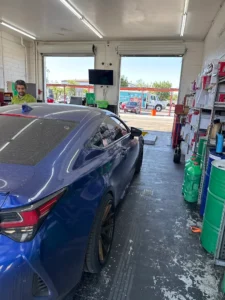
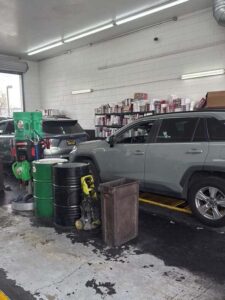
The 15th Street West EZ Lube location at 43750 15th St West handles oil changes, filters, brakes, batteries, tires, coolant, and more in one drive-thru visit. No appointment needed.
Does dealership service protect my warranty better than an independent shop?
No. Federal law under the Magnuson-Moss Warranty Act protects your right to use independent shops for routine maintenance. Keep records including oil type, filter brand, and mileage.
Get Your Central Lancaster Vehicle Serviced
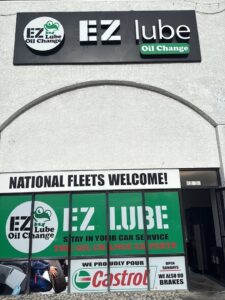
EZ Lube Oil Change on 15th Street West handles everything on this list in one drive-thru visit. No appointment needed.
Address: 43750 15th St West, Lancaster, CA 93534
Phone: 661-941-3393
Hours:
Monday through Friday: 7:30 AM to 7 PM
Saturday: 8 AM to 6 PM
Sunday: 8 AM to 5 PM
Check current oil change coupons before your visit. Serving central Lancaster, the BLVD, Antelope Valley Fairgrounds, AVC, and the entire Antelope Valley.